
Mutations
Learn how Ride A Pet mutations multiply pet speed, which mutation rolls are worth chasing and how stacked multipliers change your best mount.
Introduction
Mutation is the second half of the Ride A Pet speed equation and the part most players underuse. Hatching gets you a pet with a base speed; mutating multiplies that number, which is why a well-mutated mid-tier pet can overtake a plain high-tier one. The system turns speed into two independent levers, rarity and multiplier, so the same hatch can be ordinary for one player and exceptional for another. The developer confirms that mutating exists and makes pets faster but publishes no multiplier table, so the bands described here are a practical framework built from play rather than official values. This hub explains how the multiplier stacks, which pet deserves your rolls, and when to stop spending on a slot that has already peaked.
Ride A Pet Mutation Bands at a Glance
| Roll Band | Multiplier Feel | Best Target | Status |
|---|---|---|---|
| Minor Multiplier | Small gain, the most common outcome | Cheap throwaway pets | Common |
| Moderate Multiplier | Noticeable speed jump | Your current main mount | Everyday |
| Strong Multiplier | Large gain, uncommon | Your fastest owned pet | Keep |
| Exceptional Multiplier | Huge gain, rarely seen | An endgame pet only | Rare |
| Re-Roll Stop Point | A decision rather than a result | Any pet at its ceiling | Strategy |
Mutation Bands
Minor Multiplier
The baseline result you will see most often
Moderate Multiplier
A solid, dependable improvement worth stopping on
Strong Multiplier
A result that justifies stopping and riding the pet
Exceptional Multiplier
The outcome that defines an account's ceiling
Re-Roll Stop Point
The decision that matters more than any single roll
Core Mechanics
Mutating takes a pet you already own and layers a multiplier onto its base speed. That distinction matters: mutations multiply rather than add, so a strong multiplier on a fast pet is worth far more than the same multiplier on a slow one. The practical consequence is that your best mutation target is almost always your highest-speed pet, not your rarest one, because the base value the multiplier acts on is larger. Rolling is repeatable, so a pet can be re-mutated until you land a result worth committing to, and different copies of the same pet are independent targets. Because the result compounds with rarity, mutation is how an account keeps improving after its pet pool has matured.
Advantages
Mutation is the only system in Ride A Pet that lets a mid-game account compete with a luckier one. Because the multiplier acts on whatever base speed the pet already has, a player who rolls well on a solid rare pet can outrun someone who hatched a legendary and never mutated it. It also gives your existing collection a reason to stay useful: instead of chasing a new headliner every session, you keep improving the pet you already ride. Duplicates become assets rather than clutter, since each copy is an independent roll you can gamble on without risking your mount. And because mutating is repeatable rather than one-shot, a patient player can always grind toward a better result.
Challenges
The honest downside is opacity. The developer confirms that mutation makes pets faster but publishes no multiplier values, no roll weights and no list of variant names, so any table claiming otherwise, including ours, is a community framework rather than a data sheet. That means you cannot calculate expected value, only decide whether to keep rolling. Rolling is also a repeated cost with no guarantee, and it is easy to sink a session's income into one pet that never improves. There is an opportunity cost as well: cash spent re-rolling your mount is cash not spent on new eggs that could raise your base speed permanently. Balance the two and stop at a defined limit.
Frequently Asked Questions
How do I mutate a pet in Ride A Pet?+
Should I mutate my fastest pet or my rarest pet?+
Can mutations stack in Ride A Pet?+
How many times should I re-roll a mutation?+
Quick Tips
Always mutate your highest-speed pet, never your rarest one. Because mutation multiplies rather than adds, the absolute gain scales with the base number it acts on. A good roll on your fastest mount beats a great roll on a slow legendary every time. Before you spend anything on a pet, mount it and confirm it is actually the fastest thing you own. If it is not, you are investing in the wrong slot.
Keep a duplicate of your best pet purely as a mutation target. Rolling directly on your mounted pet means a bad result leaves you slower than you started, which is the worst possible outcome. A spare copy lets you gamble freely while your main mount stays untouched, and you only swap after the roll wins. Never mutate your only copy unless you would be happy riding whatever comes out.
Set a hard re-roll cap per pet before you start spending. There are no published mutation odds, so you cannot calculate how many attempts a better result should take, which makes unlimited rolling an easy way to drain a session's cash. Pick a number you are comfortable losing, stop the moment you hit it, and move the budget into new eggs. Base speed from better pets raises your ceiling permanently.
Raise your base speed first, then mutate. Mutation multiplies, so a bigger base makes every roll more valuable. If your current mount is a common you hatched in the first five minutes, spending on mutations is inefficient compared with hatching better eggs to find a faster pet. Get a mount you are happy with, then start rolling. This order means every mutation session is applied to a number worth multiplying.
Treat a strong mutation as a keep, not as a reason to keep rolling. Once a pet lands a result that noticeably beats your previous mount, the rational move is to ride it and redirect your cash into the next speed upgrade rather than trying to squeeze a better roll out of the same slot. Chasing a marginally better multiplier on a pet that already works is a classic way to stall an account for no measurable gain.
Featured
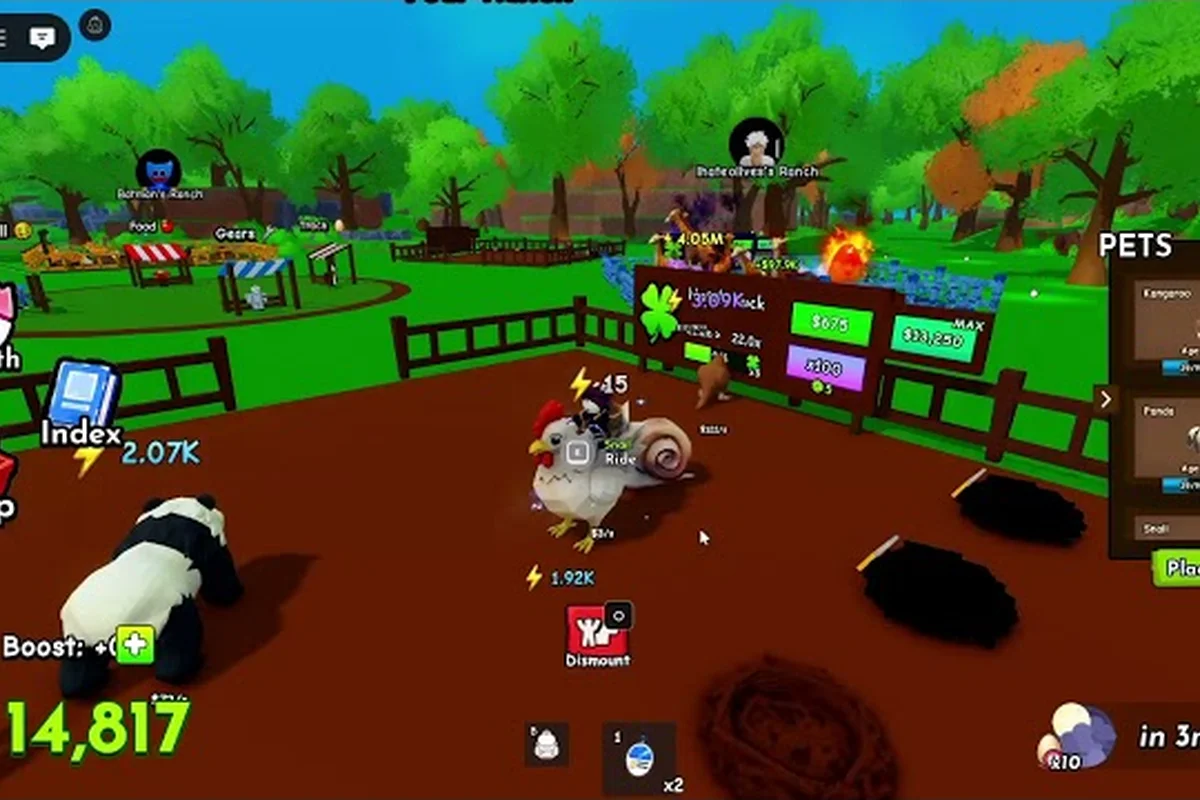
Ride A Pet All Mutation Chances: Odds by Rarity
Track Ride A Pet all mutation chances with community-logged drop rates and rarity brackets so you know which speed boosts are actually worth chasing on every hatch.
Ride A Pet How to Get Golden Pet: Odds and Route
Learn the Ride A Pet how to get golden pet path with mutation machine odds, farming tips, and the fastest reroll strategy for the rarest multiplier.
Ride A Pet Mutation List: Types, Odds, Speed Boosts
Browse the full Ride A Pet mutation list with every variant, its rarity tier, and the speed multiplier each boost adds to your newly hatched pet.
All Articles

Ride A Pet Mutation Tips: Free Boosts and Fast Rolls
Stack Ride A Pet mutation tips covering potion routes, low-cost rolls, and the farming rhythm that speeds up every new hatch you bring home.
Ride A Pet Frozen Mutation: Odds and Stacking
Chase the Ride A Pet frozen mutation with community-logged drop rates, stacking rules, and the event windows that give this icy boost a real shot.
Ride A Pet Mutation Tier List: Golden vs Rainbow
Rank the Ride A Pet mutation tier list from golden to rainbow by the speed each boost grants, so you know which rolls are worth chasing on every hatch.
Ride A Pet Mutation Value: Speed and Stacking Math
Break down Ride A Pet mutation value with real speed math, stacking rules, and which mutated pets are actually worth chasing for your top-MPH roster.