
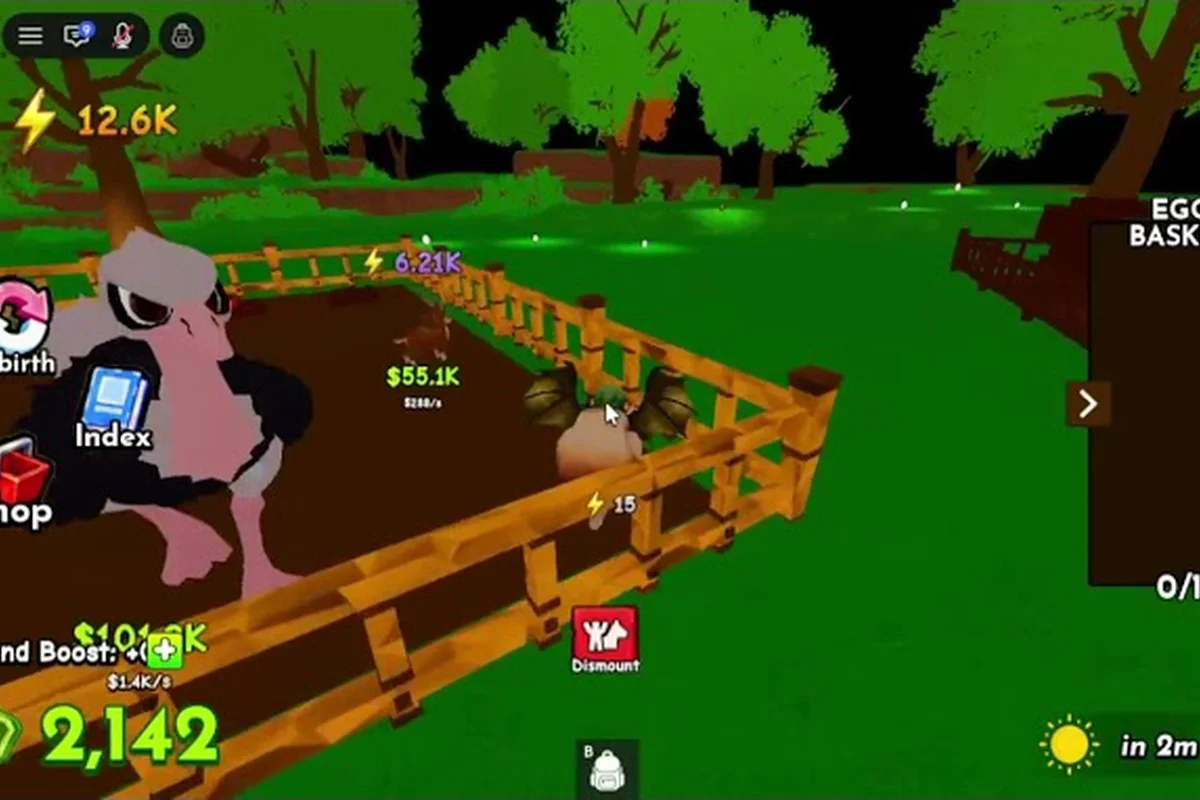
Every pet in Ride A Pet is a mount, and the faster you understand that pairing, the quicker your early sessions feel like real progress rather than a coin-flip. This ride a pet beginner guide focuses on the loop that matters most in your first hours: hatch eggs, sort the pets by travel speed, and mount the right one for the route ahead. Because the Strongest pet gameplay in Ride A Pet frames the entire experience around hatching rarer and faster pets to find rarer eggs, speed is not a flavor stat — it is the engine that pulls your roster forward.
What Ride A Pet Actually Is
Ride A Pet is a non-combat Roblox experience built around one verb: mount. You walk to an egg, you hatch it into a pet, and that pet becomes the unit you ride between nests scattered across the map. The official description is explicit that pets exist to make you travel faster, and that rarer pets come from rarer eggs — so your early game is really a hunt for hatched pets with the highest MPH Travel Speed number on the stat card.
The non-combat framing changes how you should read every screen. There is no health bar to optimize, no damage rotation to learn, and no boss with a phase-three tell to memorize. The skill ceiling sits inside route efficiency, egg rarity knowledge, and roster discipline. A player with a fast mid-tier pet and a clean mental map will outpace a player chasing a legendary pet that is technically slower but cosmetically tempting.
The Core Loop in One Breath
Hatch, sort, mount, travel, repeat. Every session in Ride A Pet is a short cycle of those four actions, and the game never really leaves that cycle even when you are pushing into the late game. The first habit to build is treating each hatched pet as a data point rather than a collectible.
How Eggs Become Mounts
Eggs are the only source of pets, and every pet you own was once an egg you touched. According to the official Ride A Pet Roblox page, the dependency runs in both directions: rarer pets come from rarer eggs, and rarer eggs drop from rarer nests. Your early hours should treat the egg as the unit of currency and the pet as the unit of mobility.
Egg Rarity Tiers at a Glance
| Egg Tier | Approx. Nest Location | Hatched Pet MPH Range | Beginner Priority |
|---|---|---|---|
| Common | Starter field, edge nests | Low single digits | Hatch and replace quickly |
| Uncommon | Mid-field nests | Low-to-mid teens | Hold one as backup mount |
| Rare | Inner ring nests | Mid-teens to 20+ | Keep for main travel |
| Legendary | Hidden / event nests | 25+ | Long-term goal mount |
A mid-teen MPH Uncommon that you hatch in your first ten minutes is genuinely more useful for map coverage than a Legendary you chase for two hours but ride less often. Community testing reported by players on hatch-rate videos (e.g. How to Get More Eggs and Pets in Ride A Pet) consistently shows that the "rarity badge" on the egg is a probability, not a guarantee, so the displayed speed on the resulting pet card is the number that should drive your decisions.
Hatch, Check, Decide
When an egg pops, do three things in order: read the speed number, compare it to your current main mount, and then decide whether to swap, bench, or release. The discipline of that three-step check is the single biggest difference between an organized roster and a messy inventory full of mid pets you never ride. If you want a deeper walkthrough on building a roster that scales, the Ride A Pet full guide covers progression beyond the first session.
Why MPH Travel Speed Decides Everything
Because there is no combat, no PvP, and no defensive mechanic to optimize, MPH Travel Speed is effectively the only number that competes for your attention. A pet that is two rarity tiers higher but five MPH slower will lose you more time across a 30-minute session than it will ever save you with a flashier model. The ride a pet noob to pro mindset starts here: rarity follows speed, not the other way around.
Reading the Pet Stat Card
Every hatched pet shows a small stat panel with the speed number front and center. New players often screenshot the rarity glow and ignore the number entirely, which is the most expensive mistake you can make in the first hour.
| Stat on Card | What It Means | Beginner Action |
|---|---|---|
| MPH Travel Speed | Top speed while mounted | Compare to current mount, swap if higher |
| Egg Origin Tier | Rarity bracket of source egg | Track for mutation reference |
| Mutation Flag | Bonus applied to hatched result | Hold the pet even at lower speed |
| Cosmetic Glow | Visual rarity marker | Ignore for performance decisions |
The mutation flag is the one stat that can override raw speed. A slightly slower pet with a useful mutation is often worth benching rather than releasing, because mutations can compound across rerolls. According to community reports compiled in Strongest pet gameplay in Ride A Pet, players who track mutation flags across ten or more hatches consistently end up with stronger late-game pets than players who only chase the highest speed number.
Building Your First Roster
Your roster does not need to be large in the first session; it needs to be clean. A two-slot mental model — one main travel mount and one short bench of mutants worth holding — covers roughly 80% of the decisions you will make in your first week. Everything else is inventory clutter that slows you down when you are trying to sort hatches at a busy nest.
Two Pets, One Job Each
| Slot | Purpose | What Goes Here |
|---|---|---|
| Main Mount | Fastest pet you currently own | Highest MPH Travel Speed pet in roster |
| Bench | Pets with rare mutations or origins | Up to 3-5 mutants worth rerolling into |
If you find yourself holding more than five bench pets, you are almost certainly keeping duplicates that will never see a mount. The release action is a feature, not a failure — every slot you free up is one fewer distraction when a rare egg lands.
Hatching Habits That Scale
-
Hatch in batches, not one at a time. Walking to a single nest for one egg is rarely worth the trip unless you already have a route that passes it.
-
Sort immediately at the nest. The longer a new pet sits unsorted in your inventory, the more likely you will forget its speed number and bench it by accident.
-
Track your top speed each session. A one-line note of your fastest hatch today gives you a benchmark to beat tomorrow, and the gap between sessions is where most beginners lose momentum.
For a focused look at slot management and the upgrade path, the Ride A Pet pet slots guide breaks down exactly when to expand beyond the two-slot model.
Beginner Mistakes That Cost the Most Time
The first hours of Ride A Pet are easy to waste on habits that feel productive but actually slow your roster growth. Most of these mistakes are not about doing the wrong action; they are about doing the right action in the wrong order. Catching them early is the cheapest way to compress your noob-to-pro curve.
| Mistake | Why It Hurts | Fix |
|---|---|---|
| Chasing Legendary eggs first | Low hatch rate, no speed guarantee | Hatch Common/Uncommon nests to build base speed |
| Keeping every hatch "just in case" | Inventory clutter, slow sorting | Apply the two-slot model from session one |
| Reading rarity glow instead of speed | Picks slower pets with better looks | Always read the MPH number first |
| Mounting before sorting | Old mount blocks comparison view | Dismount, sort, then remount |
| Ignoring mutations | Loses long-term roster value | Keep one mutation bench even at low speed |
The pattern across all of these is the same: the game rewards speed of decision, not depth of decision. A beginner who sorts in five seconds and mounts the right pet will outpace a veteran who agonizes for thirty seconds over a marginal upgrade. If you want a more exhaustive list of early traps, the Ride A Pet beginner mistakes page walks through the platform-specific versions of these errors.
From Noob to Pro in Your First Week
The noob-to-pro transition in Ride A Pet is less about unlocking new systems and more about removing decision friction. Once your two-slot model is automatic and your eyes go to the speed number before the rarity glow, the rest of the progression is just routing. The ride a pet tips and tricks that follow are the ones players report as the highest leverage per minute spent.
High-Leverage Beginner Tips
-
Learn two nest routes, not ten. Two routes you can run blindfolded will outperform ten routes you half-remember, because hatching speed compounds across every session.
-
Time your hatches to nest traffic. Busy nests are where eggs respawn fastest, so route your main mount through the highest-traffic area first.
-
Keep a "release" muscle. A new player who releases a mid-tier duplicate in the first ten seconds is already playing with a pro mindset.
-
Watch your MPH number, not your pet count. The leaderboard that matters is your personal-best speed, not the size of your roster.
If cash flow is your bottleneck, the Ride A Pet money making guide pairs cleanly with this loop, since faster travel means more nest visits per hour and more hatches per session.
Reading Pet Speed in Practice
| MPH Range | Practical Feel | Beginner Verdict |
|---|---|---|
| Under 10 | Walking pace with a small boost | Replace immediately |
| 10-15 | Noticeably faster than on-foot | Hold as backup mount |
| 15-22 | Comfortable mid-game travel | Main mount candidate |
| 22-30 | Fast enough to skip shorter nests | Main mount, protect the slot |
| 30+ | Late-game goal speed | Long-term anchor pet |
The thresholds above are based on community-reported feel from gameplay videos, not on a developer-published formula. According to players documenting their progression in the Strongest pet gameplay clip, the jump from "noticeably faster" to "comfortable mid-game travel" is where most beginners feel the game click for the first time. That range is also where your two-slot model starts to actually pay off, because you finally have a main mount that meaningfully changes how you move.
Putting It All Together
A clean ride a pet beginner guide is really a clean decision tree: hatch, read the speed number, compare to your main mount, and either swap, bench, or release. Repeat that tree at every nest and your roster compounds on its own. Everything else — mutation tracking, route optimization, cash multipliers — is layered on top of that one habit, not in place of it. Keep the two-slot model visible in your inventory, treat MPH Travel Speed as the only number that matters for performance, and your first week will already feel like a different game than the one you loaded into on day one.
Frequently Asked Questions
What is the most important stat for a new Ride A Pet player?
MPH Travel Speed is the stat that should drive every early decision. Because the game has no combat, your top speed while mounted is the single number that affects how many nests you can visit per session, which in turn controls how many eggs you hatch. Read the speed number on every pet card before you look at the rarity glow or the cosmetic model.
How do I hatch my first Rare or Legendary pet?
Hatch more eggs at higher-traffic nests, because rarer eggs drop from rarer nests and busier nests respawn faster. Walk your current main mount along the inner ring of the map and hatch every egg you find before moving to the next nest. According to the official Roblox page, rarity is probability-based, so the fastest path to a Rare is volume of hatches, not chasing a single Legendary nest.
Should I keep Common pets or release them?
Release any Common pet whose MPH Travel Speed is below your current main mount, and keep at most one Common as a literal backup in case your main mount is unavailable. The two-slot model only works if the bench stays small, and Common pets almost never out-value the slot they take up once you have an Uncommon or Rare in your main mount.
How do I know when to swap my main mount?
Swap the moment a newly hatched pet shows a higher MPH Travel Speed number than your current main mount, unless that new pet has a clearly worse mutation flag. The comparison should take less than five seconds at the nest. If you find yourself hesitating, the speed number has already answered the question for you.
Can I play Ride A Pet effectively on mobile or console?
Yes, but the two-slot model becomes even more important because inventory management on touch controllers is slower. Pre-sort your bench before you leave a high-traffic nest, and resist the urge to hold more than three bench pets. The ride a pet how to play loop is identical across platforms; the only difference is how fast you can clear the inventory between hatches.