
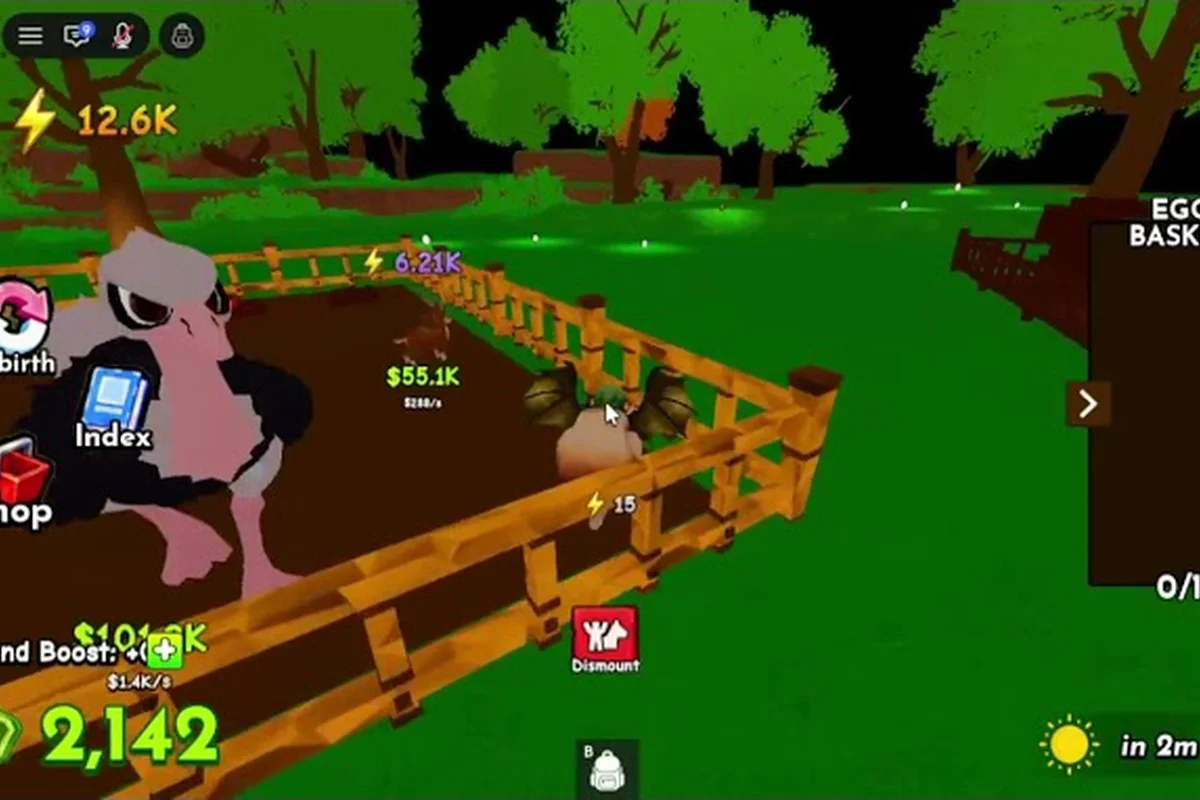
Your backpack is the single inventory that holds every pet you have ever hatched in Ride A Pet, and it caps how aggressively you can grind before you are forced to delete something you might actually want. The official page confirms the store sells an Infinite Backpack game pass (499 Robux) that lifts the usual capacity ceiling, which is why a thoughtful ride a pet pet slots guide matters long before you ever spend a single Robux on the pass. This guide walks through how slots actually work, where the real pressure points sit, and which upgrades buy you the most headroom per session. A thoughtful Ride A Pet Beginner Guide makes it clear why a thoughtful ride a pet pet slots guide matters long before you ever spend a single Robux on the pass.
How Many Pets Fit Before You Must Choose
A pet in Ride A Pet is the unit you mount to travel faster across the map, and every egg you hatch produces exactly one. According to the How to Get More Eggs and Pets in Ride a Pet, the dependency between pets and eggs is explicit: you hatch rarer and faster pets in order to find rarer eggs, which means a pet's headline number is its displayed Speed stat, not its rarity label. A fast mid-tier mount will cover more nests per minute than a slow legendary one, and that coverage directly determines how fast your backpack fills.
The default backpack starts small enough that new players feel inventory pressure within their first or second session of active hatching. Community players report that the limit feels comfortable until you start chaining multiple eggs per run, at which point the ceiling is suddenly the bottleneck. That pressure is the entire reason the Infinite Backpack pass exists, and it is also why a ride a pet pet slots guide has to treat the bag as a resource budget rather than a passive container.
| Slot Source | Cost | Effect on Capacity | Best Moment to Buy |
|---|---|---|---|
| Default starter bag | Free | Base capacity (small) | Always available |
| Infinite Backpack pass | 499 Robux | Removes the usual ceiling | After 2-3 weeks of active play |
| Egg hatch output | Free (in-game) | Adds 1 pet per hatch | Ongoing |
| Pet deletion | Free (in-game) | Frees 1 slot, permanent loss | When hatches outpace review time |
The developer community page groups the backpack alongside the radar, instant hatch, and auto collect as the four Convenience Passes. None of them changes hatch odds or pet rarity, which is a critical fact for any ride a pet upgrading guide. The pass is purely a time-saver, and a free player with a disciplined route can still match a pass holder given enough sessions.
Slot Pressure and the Real Cost of Deleting
Pressure on your slots does not build linearly. It spikes in waves, because eggs tend to drop in clusters when you are on a hot route and dry up when you are not. Community videos on collecting more eggs and pets illustrate this rhythm clearly: a fast pet reaches more nests per minute, and each new nest adds another pet to your review queue. The compounding effect is what makes a ride a pet pet slots guide decision feel urgent, even when the absolute number of pets in your bag is still well below the visible cap.
The hidden cost of slot pressure is the Deletion Tax. Every time you delete a pet to free space, you are gambling that the pet you delete is not the one you would have wanted two days from now. A good ride a pet upgrading guide treats deletion as a real cost, not a free action, because a pet you discard is a slot you cannot roll back without re-hatching from scratch. New players tend to delete aggressively and then regret it once they learn which stats actually matter, which is why holding a slightly larger buffer early is almost always cheaper than learning the hard way.
| Pressure Trigger | Why It Spikes Slots | Best Response |
|---|---|---|
| First Infinite Egg | 1-3 pets in a single run | Pause and review before deleting |
| Speed mutation discovery | 1 mutation pet + filler | Keep mutation, delete filler |
| Event nest chain | 5-10 pets in one session | Use a review checklist, not impulse |
| Passive grinding | 1-2 pets per hour | Slow burn, low pressure |
Notice how the first three triggers all create a burst of inventory, while the fourth is the slow background drip. The bursts are what actually break a player who has not planned their ride a pet how to progress fast route, because the burst is over before you have time to make a calm decision.
Building a Two-Tier Roster Inside Your Slots
The efficient mental model for any ride a pet pet slots guide is a two-tier roster, not a single ranked list. The top tier is your Travel Mount: the fastest pet you currently own, judged purely on displayed Speed, which you ride for every run. The bottom tier is your Hold List: a short, intentional collection of pets that you keep for mutation, event, or reroll reasons, even though none of them are your current travel mount.
Community testing on the roster-building video from How to Get More Eggs and Pets in Ride a Pet reinforces this pattern: experienced players hatch repeatedly, keep the fastest result, and relegate everything else. Applied to a ride a pet upgrading guide, the efficient habit is a strict two-slot mental model — one best mount for travelling, and a tight, named list of pets you are intentionally holding for a specific reason.
| Tier | Purpose | Selection Rule | Typical Size |
|---|---|---|---|
| Travel Mount | Fastest Speed stat | Replace whenever a faster hatch appears | 1 slot |
| Hold List | Mutation stock, event pets, trade bait | Keep only if it has a named purpose | 2-5 slots |
| Review Buffer | Fresh hatches awaiting verdict | Delete or promote within 24h | 2-3 slots |
| Filler | Everything else | Default action: delete | 0 slots |
The Review Buffer is the underrated tier. It exists specifically so that a new hatch does not force an instant decision while you are still mid-run, and it converts impulsive deletion into a delayed, more accurate call. A solid ride a pet guide will always mention a buffer tier, because without it the two-tier model collapses the moment a clutch egg drops.
Upgrade Priorities: What to Spend On Before Slots
The most common mistake in a ride a pet upgrading guide is treating the Infinite Backpack as the first upgrade to buy. It is not. The pass is a quality-of-life multiplier, but it does not improve your Speed, your hatch output, or your ability to reach new nests. The first three upgrades that actually move your progression are Speed on your travel mount, a radar or equivalent nest-finder, and a route that minimizes dead time. Slots only become urgent once those three are already in place.
Here is a rough upgrade ladder that mirrors what most experienced players report, though exact order will vary by how you play:
| Priority | Upgrade | Why It Comes First |
|---|---|---|
| 1 | Fastest available travel mount | Higher Speed = more nests per minute |
| 2 | Radar / nest-finder pass | Replaces wandering with targeted runs |
| 3 | Route optimization | Cuts travel time between nests |
| 4 | Instant hatch / auto collect | Removes idle clicks between actions |
| 5 | Infinite Backpack pass | Lifts the deletion pressure, last because it does not raise Speed |
Notice how the Infinite Backpack sits at position 5. By the time you reach it, your Speed is high enough that slot pressure has been a recurring nuisance, and the 499 Robux feels like a fair trade rather than a panic purchase. Players who buy the pass on day one almost always report that they could have spent those Robux on something with more direct return, which is why a ride a pet tips list should always front-load Speed and route work before storage work.
How to Progress Fast Without Burning Slots
The fastest progress in Ride A Pet comes from a tight loop: hatch, review, keep or delete, and repeat. The loop is short, and every minute you save inside it is a minute of extra hatches per session. A ride a pet how to progress fast plan that ignores slot management will eventually stall, because the loop breaks the moment you cannot fit a new hatch in your bag, and you spend 30 seconds scrambling through your roster to find something safe to delete.
The workaround is to make deletion a scheduled action, not a reaction. Set a personal rule: every hatch session ends with a review pass, and during the review pass you promote the best new Speed mount, drop one pet from the Hold List that no longer has a purpose, and clear the Review Buffer back to zero. This converts a chaotic decision into a 60-second habit, and it is the single most effective ride a pet tips habit for players who are juggling a near-full bag.
| Loop Step | Time Budget | Output |
|---|---|---|
| Hatch at active nest | 30-60s | 1 new pet |
| Mount and ride to next nest | 20-40s | Distance covered |
| Review new pet on the move | 10s | Promote, hold, or delete decision |
| End-of-session cleanup | 60s | Buffer cleared, hold list trimmed |
A neat side effect of this loop is that it makes the Infinite Backpack pass almost optional. If your buffer is always empty and your hold list is always trimmed, the natural ceiling stops feeling like a ceiling. The pass is still a real convenience, but you stop needing it to function, which is the difference between a ride a pet guide that teaches the system and one that just pushes you toward the store.
When the Infinite Backpack Pass Is Actually Worth It
There are exactly two situations where the Infinite Backpack pass earns its 499 Robux back quickly. The first is when you are an active grinder who hatches several times per session and refuses to delete anything until a pet has been reviewed twice. The second is when you are actively chasing a specific mutation outcome, because the mutation grind produces a high volume of near-miss pets that you want to compare before you commit to a deletion. In both cases, the pass removes a friction that you actually feel every session, which is the test of whether a ride a pet pet slots guide investment is real or cosmetic.
For everyone else, the pass is a luxury. A free player who follows the two-tier roster model, runs the review loop, and treats the buffer as a scheduled cleanup will rarely feel slot pressure at all. The pass is the right call once it changes your day-to-day feel of the game, not before. That distinction is what separates a ride a pet upgrading guide that respects your Robux budget from one that treats every pass as mandatory.
| Player Type | Pass Worth It? | Better Alternative |
|---|---|---|
| Casual, 1-2 sessions/week | No | Discipline + review loop |
| Daily grinder, low deletion | Yes | Pass pays for itself in saved time |
| Mutation hunter | Yes | Hold list grows fast |
| New player under 2 weeks | No | Spend on Speed + radar first |
Common Slot Management Mistakes
The most expensive mistake in a ride a pet pet slots guide is also the most common: deleting your fastest pet by accident. It happens when the Review Buffer is too large, when a new hatch pushes a good pet off the visible end of the list, and when the player is in a hurry. The fix is mechanical: never delete from the main list. Always swap the new pet into the slot of the pet you are sure you want to drop, and verify the Speed stat before confirming. This costs you two extra seconds per deletion and saves you a full re-hatch cycle when you slip.
The second mistake is keeping a pet because it is rare, not because it is fast. Rarity is a label, not a stat, and a rare pet with mediocre Speed is a slot that is earning nothing. The two-tier roster model fixes this by requiring every held pet to have a named purpose beyond rarity, which is the simplest ride a pet tips filter you can apply on the spot.
The third mistake is buying the Infinite Backpack pass before the rest of the system is tuned. A player with a slow mount and no radar will hatch less, but the slow mount is the real bottleneck, not the bag. Spending 499 Robux on storage when the underlying Speed is the problem is the textbook example of optimizing the wrong variable, and a good ride a pet how to progress fast plan flags it before you check out.
| Mistake | Frequency | Fix |
|---|---|---|
| Deleting best Speed by accident | Very common | Always swap, never blind delete |
| Keeping rare-but-slow pets | Common | Require a named purpose per hold |
| Buying pass before Speed | Common | Upgrade Speed and radar first |
| No review buffer at all | Moderate | Reserve 2-3 buffer slots by default |
Frequently Asked Questions
How many slots do you start with in Ride A Pet?
The base backpack starts small, and the exact number shifts with game updates. The official page frames the Infinite Backpack pass as the way to lift the usual ceiling, which means the default cap is intentionally low enough to be a real constraint during the first weeks of play.
Is the Infinite Backpack pass worth 499 Robux?
It is worth it for daily grinders and mutation hunters, because the slot pressure they feel is real and recurring. Casual players who run a tight review loop and a small hold list can usually avoid the pass entirely, since their natural ceiling rarely feels like a ceiling.
Should I delete pets I am unsure about?
Wait until the end of the session and review them in a calm window, not mid-run. A scheduled review pass is the single most effective ride a pet tips habit for avoiding accidental deletions, and it costs almost nothing once it is a routine.
What is the best ride a pet upgrading guide priority right now?
Speed on your travel mount first, then a nest-finder such as the radar, then a clean route, then quality-of-life passes like instant hatch and auto collect. The Infinite Backpack pass sits at the end of that ladder, because storage is a quality-of-life multiplier, not a progression unlock.
How do I progress fast without buying any passes?
Run the hatch-review-keep loop on a tight schedule, keep your hold list to two or three named pets, and clear the buffer at the end of every session. That loop alone gets most free players within striking distance of pass-holders, because the underlying Speed and route are what actually move progression.