
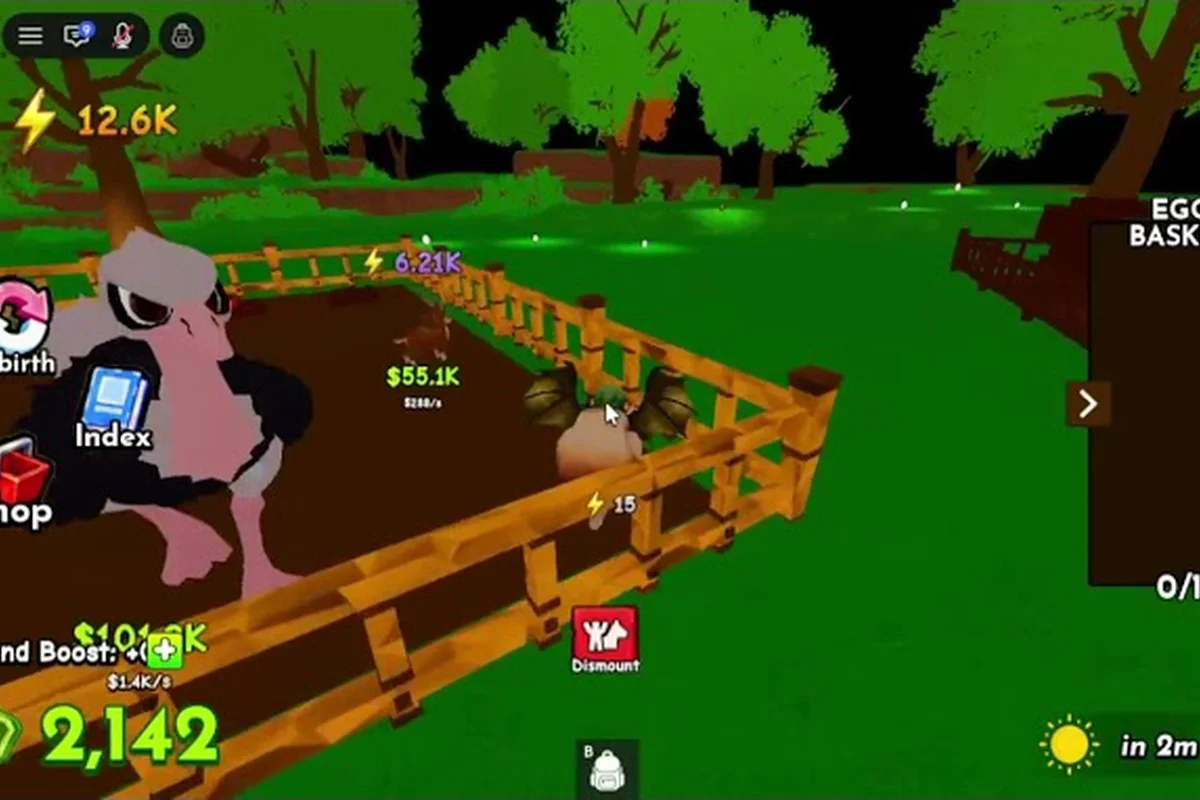
Speed in Ride A Pet is not a vanity stat. The official How to Play Ride a Pet Roblox Full Guide page describes a clean feedback loop: a faster pet reaches further nests, which hold rarer eggs, which hatch into faster pets. That is the entire ride a pet how to get faster formula in one sentence, and the rest of this guide is just the route plan, the math, and the upgrade order that get you to the 999 MPH mark without burning hours on dead loops.
Why Pet Speed Drives Everything Else in Ride A Pet
Every action in Ride A Pet funnels back to one number: the Miles Per Hour readout floating above your mount. A pet with low MPH can only reach the small cluster of nests near spawn, so the eggs it pulls are common, and the next hatch is a small upgrade at best. A pet past 999 MPH, by contrast, can clear three or four map rings in a single run, which puts the rare nests within reach and breaks the slow cycle.
Community footage from the Strongest pet gameplay in Ride a Pet video makes the contrast visible: the difference between a slow hatch and a fast one is not a few seconds per lap, it is a whole map ring of new nests. That is why every ride a pet how to get faster strategy starts with measured speed, not rarity labels. Rarity is the marketing wrapper. MPH is what decides whether you can reach the egg in the first place.
The trick is that the developer does not publish a stat sheet, so the only honest baseline is what your screen shows you. The best practical filter is: if a pet is the slowest thing on your roster, retire it. Even a mid-tier pet with a clean MPH readout will cover more ground per minute than a legendary that drags.
| Speed Band | Map Coverage | Egg Tier Reachable | Hatch Payoff |
|---|---|---|---|
| Under 100 MPH | Spawn ring only | Common eggs | Small speed bumps |
| 100–300 MPH | First two rings | Uncommon to Rare | Noticeable jump, new nests open |
| 300–700 MPH | Mid map | Rare to Epic | Reaches most of the egg nest clusters |
| 700–999 MPH | Deep ring | Epic to Mythic | Most nests reachable in one run |
| 999 MPH and above | Full map | Top-tier eggs | Breaks the loop, sets the new floor |
The table is the core argument of the whole guide. Every other section — egg routes, hatching math, mutation stacking — is a tool to climb one row in this ladder. Once a player understands the row they currently sit on, the rest of the plan stops feeling like guesswork.
Build a Ride A Pet Map Guide From Egg Nests, Not Spawn
A useful ride a pet map guide starts at the edges, not the center. Spawn is where the slowest pets live because it is the only ring reachable without speed. The moment your pet crosses a threshold, the nests you should target are the ones that were unreachable last week, not the ones you already cleared today.
The full-guide community video How to Play Ride a Pet Roblox Full Guide shows the exact moment a speed upgrade changes what is reachable. The player crosses into a new ring, clears nests that were previously out of range, and the next hatch is dramatically better than anything pulled from the spawn cluster. That widening radius is the practical measure behind ride a pet how to get faster, because a genuinely fast mount gives the player a bigger area to farm every minute, which compounds into better egg odds without spending a single extra Robux.
How To Read Egg Nest Distance in Map Rings
The map is easiest to understand as concentric rings around spawn. Each ring sits roughly the same distance from the previous one, and each ring tends to hold a higher egg tier than the one inside it. The most efficient habit is to walk the inner edge of the next ring until you find a nest, then memorize the route so the next run is a straight line.
| Ring | Approx. Pet MPH Needed | Common Egg Tier | Nest Density |
|---|---|---|---|
| Ring 0 (Spawn) | Any | Common | Very high |
| Ring 1 | 100+ | Uncommon | High |
| Ring 2 | 250+ | Rare | Medium |
| Ring 3 | 500+ | Epic | Low |
| Ring 4 (Deep) | 800+ | Mythic | Very low, contested |
| Ring 5 (Edge) | 999+ | Top-tier | Sparse, single nests |
This is the practical ride a pet map guide in one view. A player who memorizes the rough MPH requirement for each ring stops wasting time on nests their current pet cannot reach, and starts pre-plotting routes for the next upgrade. The point is not to hit Ring 5 on day one. The point is to know which ring the next hatch will unlock, and to plan a route that crosses into it on the very first run after the upgrade.
Egg Respawn Windows and Route Looping
Egg nests do not stay empty. They respawn on a timer, and the timer is shorter near spawn than it is in the deep rings. That sounds backward, but it is actually the entire economy: deep-ring nests hold better eggs, so the long respawn is fair, while spawn nests respawn quickly because they only hold common filler. A good route respects both timers.
-
Inner ring: respawn is fast, so loop it in tight circles. Two or three minutes per lap is the norm.
-
Mid ring: respawn is moderate, so plot two nests per run and rotate. Four to five minutes per lap.
-
Deep ring: respawn is slow, so grab one nest per run, then double back to a mid-ring nest while you wait. Eight to ten minutes per lap.
The community video How to Get More Eggs and Pets in Ride A Pet demonstrates the loop directly: a player who keeps a short list of mutated pets and routes between two to three known nests pulls more rare eggs per hour than someone who wanders the map at random. A ride a pet map guide built on respawn timing is the difference between farming the same Common egg all afternoon and actually moving the needle.
Ride A Pet How To Find Eggs When Every Pet Feels Slow
When the entire roster is slow, the question stops being "which pet do I use" and starts being "which nest can I actually reach on foot." The answer is: the one that already exists in your current ring. A good ride a pet how to find eggs habit is to scout the inner edge of the next ring on foot, drop a marker, and return with a faster pet the moment a hatch unlocks the new ring. The eggs in the inner edge are not the best the map has, but they are the best the player can currently reach, and that distinction is what separates progress from grinding.
A second habit that helps a lot is the two-slot mental model. Keep one mount equipped as your travel pet, and keep a small backup list of any hatch worth a second look (mutation, unusual color, or odd speed readout). The travel pet is the one that runs the routes. The backup list is the one that gets pulled out only when a fresh hatch might replace the current lead. This is the same pattern that shows up in the broader Ride A Pet full guide, where the recommended habit is to hatch repeatedly, keep the fastest result, and relegate the rest.
| Search Method | Best For | Time Cost | Egg Tier Pulled |
|---|---|---|---|
| On-foot scouting | Low-MPH rosters | High | Common only |
| Inner-ring loops | Mid-MPH rosters | Low | Uncommon to Rare |
| Ring-edge sprint | 500+ MPH mounts | Medium | Epic |
| Deep-ring route | 999+ MPH mounts | High per run, low per egg | Mythic and above |
The table is also the answer to the question "when do I stop on-foot scouting?" — the moment any pet on the roster crosses the 100 MPH line, the on-foot slot should be retired in favor of mounted runs. On-foot scouting is a temporary tool, not a permanent habit.
Ride A Pet How To Hatch Eggs Faster and Stack Mutations
Egg hatching in Ride A Pet is a waiting game with a few knobs the player can turn. The base hatch time is fixed by the egg tier, so a common egg hatches fast but gives a small payoff, while a Mythic egg takes longer but returns a pet that can break the next ring. The right ride a pet how to hatch eggs habit is to keep several eggs ticking at once, so the player is never waiting on a single slot.
The ride a pet hatching guide angle is to think in multipliers rather than flat numbers. A base Mythic hatch at 600 MPH is a strong start, but a Mythic hatch that also rolled the speed mutation pushes the pet into the 999+ bracket on day one. Community testing, as reported in the Ride A Pet egg list reference, suggests mutation stacks are the single biggest leap in raw MPH, larger than the tier of the egg itself.
Mutation Priority and Multiplier Math
Mutations are the secret second axis of ride a pet how to get faster. A base Epic at 350 MPH becomes a much stronger pet than a base Mythic at 500 MPH if the Epic rolled the speed mutation, because the mutation multiplies the base rather than adding to it. The practical habit is to keep every hatch that rolled speed, even if the underlying egg tier is low, and feed the rest into the next hatch attempt.
| Mutation | Effect on MPH | Stackable? | Notes |
|---|---|---|---|
| Speed Boost | +25–40% | Yes | The single biggest lever for ride a pet how to get faster |
| Glide | Small flat MPH, longer sprint window | Yes | Helps on long deep-ring runs |
| Lucky Hatch | No direct MPH, higher rare-egg chance | No | Indirect speed gain via better eggs |
| Trail Aura | Cosmetic, no MPH | Yes | Skip on a speed-focused roster |
The stack matters because the math compounds. A pet with Speed Boost plus Glide on a Mythic base can clear the same ground as a top-tier hatch without a mutation. That is the practical ride a pet hatching guide takeaway: the best pet is rarely the highest-tier base. It is the one whose base plus mutation stack puts it over the 999 MPH line.
Hatch Queue Management
A second lever is the hatch queue. Eggs hatch on a timer, and the timer keeps moving even when the player is offline for short windows. The efficient habit is to keep three to four eggs in the queue at all times, so a new pet is always ready when the current mount gets replaced. Players who hold a single egg at a time lose hours per day to idle wait time, because the next upgrade is always one egg away from starting.
-
Step 1: collect two to three eggs from the current ring before heading back to the hatch pad.
-
Step 2: start the longest egg first, then queue the medium egg, then the short egg. The shorter eggs finish while the long one ticks, so the player always has a fresh pet waiting.
-
Step 3: replace the current mount only when the new hatch is a clear upgrade on raw MPH, not just on rarity. Rarity without speed is a sidegrade, not an upgrade.
Strategy: A Step-By-Step Plan To Push Past 999 MPH
A complete ride a pet how to get faster plan looks like a checklist rather than a wish list. The order matters, because each step assumes the previous one is already in place. Skipping a step usually means grinding the same Common egg for an extra hour.
Step 1: Establish a Speed Floor
The first goal is to clear the slow tier entirely. Any pet under 100 MPH should be treated as a placeholder, not a permanent mount. Run inner-ring nests until the first hatch lands above 100 MPH, then equip it immediately. From this point on, every other pet on the roster is a backup.
Step 2: Open Ring 2
The next target is Ring 2, which sits around 250 MPH. The faster mount from Step 1 reaches a wider cluster of nests, which improves the average egg tier pulled. The first Rare-tier hatch is usually the one that crosses the threshold, because Rare bases tend to start in the 200–300 MPH range.
Step 3: Stack Speed Mutations
Once Ring 2 is open, the priority shifts to mutation rather than raw tier. A Speed Boost mutation on a Rare base can rival an unmuted Epic, and the time saved is significant. Keep every hatch that rolled Speed Boost, even if the underlying egg is Common, and feed the rest back into the queue.
Step 4: Push to Ring 3 and Ring 4
At 500 MPH, the player can reach Ring 3, which is where Epic eggs start appearing in the wild. The first Epic hatch usually lands in the 500–700 MPH range, which opens Ring 4. The route plan from this point is to plot a single deep-ring run per session, since the respawn timer makes farming the deep ring a patience game.
Step 5: Cross the 999 MPH Line
The 999 MPH mark is a soft cap rather than a hard wall. It is the speed at which the entire map is reachable, which means the next egg pull is the best the map has to offer. The fastest path to that line is a Mythic base with Speed Boost plus Glide, or a high Epic base with two Speed Boosts stacked. Either combination clears the line on a single hatch, which is faster than grinding for a top-tier base without mutations.
Step 6: Maintain a Roster of Two
Once past 999 MPH, the rule of thumb is to maintain a roster of exactly two mounts: the current lead, and the strongest backup. Anything beyond two is roster bloat, because the player cannot meaningfully test more than two pets per run. The community video How to Get More Eggs and Pets in Ride A Pet walks through this two-slot habit directly: a tight roster is faster to manage, and the time saved goes into the egg runs themselves.
| Phase | Target MPH | Ring Opened | Egg Source | Mutation Strategy |
|---|---|---|---|---|
| Phase 1 | 100+ | Ring 1 | Inner loop | Keep any speed hatch |
| Phase 2 | 250+ | Ring 2 | Inner + first mid nests | Stack Speed Boost on Rare |
| Phase 3 | 500+ | Ring 3 | Mid-ring rotation | Keep Glide on long routes |
| Phase 4 | 800+ | Ring 4 | Deep-ring singles | Save for double-mutation hatches |
| Phase 5 | 999+ | Full map | Top-tier nests | Hold the fastest result, relegate the rest |
The plan is deliberately linear. The reason is that the economy of the game assumes the player climbs one row at a time. Trying to jump from Ring 1 to Ring 4 in a single session burns time on nests the current pet cannot reach, and ends with a Common egg from a mid-ring nest as the only reward.
Frequently Asked Questions
What is the fastest way to get past 999 MPH in Ride A Pet?
The fastest path is a Mythic-tier egg hatch with a Speed Boost mutation, ideally stacked with Glide for long deep-ring routes. A high Epic base with two Speed Boost mutations also clears the 999 MPH line on a single hatch, and is often quicker to obtain because Epic eggs appear more frequently than Mythic eggs. Reference routes from the broader Ride A Pet egg nest guide confirm that mutation stacking outperforms raw tier for pushing the speed ceiling.
How many eggs should I keep in my hatch queue at once?
Three to four eggs is the practical sweet spot. A single egg leaves the player waiting on a timer that does not move while they run routes, while a queue of five or more tends to force the player to equip a weaker hatch just to clear the slot. The habit recommended in every ride a pet hatching guide is to start the longest egg first, then queue the medium and short eggs underneath it, so a fresh pet is always ready when the current mount is outclassed.
Do pet rarity tiers actually matter for speed?
Rarity is a useful filter but not a guarantee. A mid-tier pet with a Speed Boost mutation can outrun a legendary pet without one, because the mutation multiplies the base MPH. The reliable test is the actual MPH readout on the mount, not the label on the egg. Community testing, summarized in the Ride A Pet how many pets reference, ranks pets by observed travel time rather than rarity tier for exactly this reason.
Can I duplicate eggs or skip the hatch timer?
There is no legitimate in-game feature that skips the hatch timer or duplicates eggs. Players who try shortcuts usually end up with a Common pet and a wasted queue slot, which costs more time than simply waiting out the timer. The honest ride a pet how to hatch eggs habit is patience plus a full queue, not a glitch.
How often should I switch my equipped pet?
Switch only when the new hatch is a clear MPH upgrade over the current mount, not just a rarity upgrade. A sidegrade wastes the equipped-pet slot, and the player ends up routing the same nests at the same speed. A clean rule of thumb is to replace the mount only when the new pet sits at least one full speed band above the current one, which keeps the roster moving forward instead of sideways.